Dog Walking in Frisco, TX:
What Daily, Mid-Day, and Puppy Walks Include
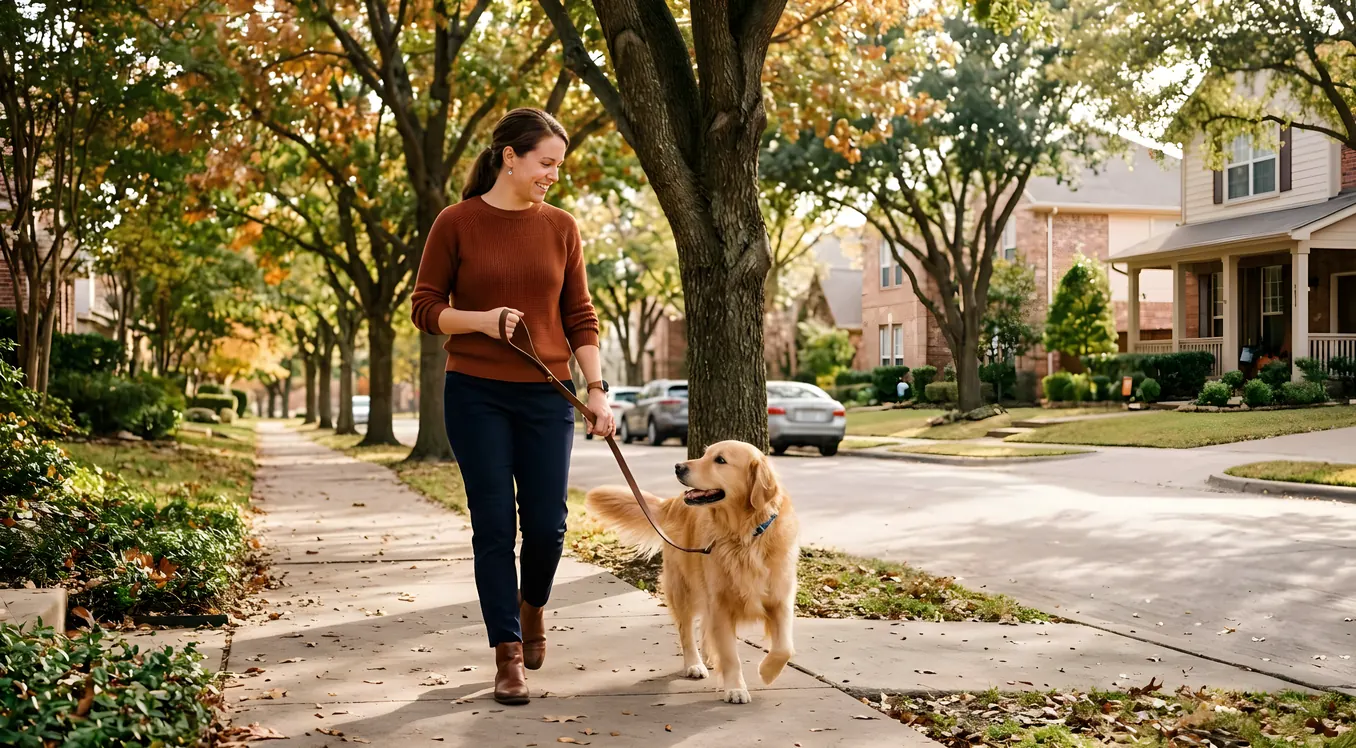
Dog walking in Frisco, TX covers three distinct visit types: daily walks, mid-day check-ins for working owners, and shorter puppy visits built around a young dog’s smaller bladder. A professional dog walker in Frisco provides scheduled, GPS-tracked walks because working owners can’t always get home during the day to let their dog out. Legitimate services share a common trust standard: bonding, insurance, background checks, and, ideally, W2 employment rather than gig-contractor status, since Texas has no state license requirement for pet sitters or dog walkers. Each walk typically includes a logged start and end time plus a photo or written report, so an owner can confirm the visit happened as scheduled. Regular walking matters beyond the bathroom break, too: consistent exercise supports a healthy weight, and a new route’s mental stimulation can reduce separation anxiety in a dog left alone for a full workday. Frisco adds one wrinkle most walking guides skip: North Texas summers push pavement and afternoon temperatures high enough that walk timing becomes a safety decision. For owners ready to compare local options, the directory lists dog walkers vetted against these standards.
Types of Dog Walking Services in Frisco
A daily walk is what most Frisco dog owners picture: one scheduled leashed walk, usually 20 to 30 minutes, timed around when the dog would otherwise be alone the longest. It fits an owner who’s out most of the day with no midday break of their own.
A mid-day walk is shorter and solves a different problem. The dog isn’t necessarily alone all day, but a workday stretches long enough that a lunchtime potty break and brief walk make a real difference, especially for a young or high-energy dog that struggles to hold it for eight or nine hours straight. For a full breakdown of scheduling and what a lunchtime visit includes, see mid-day pet visits.
Puppy visits are shorter still and happen more often, usually built around quick potty breaks rather than a full walk. A young dog’s bladder can’t wait as long as an adult dog’s, so a puppy in the middle of housetraining often needs three or four short visits a day instead of one longer walk.
Which type fits a given dog depends on more than the owner’s schedule. High-energy breeds typically need more frequent, shorter bursts of activity than a single long walk provides, while a senior dog with joint stiffness may do best with one calm daily walk at a slower pace.
What a Professional Dog Walker in Frisco Actually Does
A professional-standard walk starts before the first walk happens. A legitimate dog walker in Frisco schedules a meet-and-greet first: an introduction where the walker meets the dog, reviews the feeding schedule and any behavioral notes, and sorts out key or access logistics. Skipping this step is a clear sign of a quick gig, not a real professional visit.
Once walks begin, two features separate a professional service from a casual or app-based walker: a GPS-tracked visit with a logged start and end time, and a photo or written report sent afterward. A bonded, insured, and background-checked dog walker in Frisco should offer a GPS-tracked visit log so owners can confirm exactly when the walk happened.
Behind those features sits a trust-standard checklist worth asking about directly. A dog walker should be bonded and insured, background-checked, and, where the business model supports it, a W2 employee rather than a 1099 gig contractor. Since Texas doesn’t require a state license for pet sitters or dog walkers, these third-party verifications substitute for licensing, and asking whether a walker holds a Pet Sitters International or CPPS certification is a reasonable way to confirm the standard.
The red flags run the opposite direction: no meet-and-greet offered, no visible insurance or bonding information, cash-only payment with no visit log, or reluctance to share references.
Why Regular Walks Matter for Frisco Dogs
A walk does more physical work than it looks like from the outside. Regular exercise keeps a dog at a healthy weight, and weight management affects a dog’s long-term joint and heart health more than most owners realize during a busy week. The physical side is only half the story, though. A walk breaks up a dog’s day with new smells and new scenery, and that mental stimulation matters just as much as the exercise itself for a dog spending most of its day inside four walls.
The behavioral payoff is where regular walking earns its keep. A dog left alone for a full workday without a midday break is more prone to separation anxiety, and that anxiety often shows up as chewed furniture, scratched doors, or nonstop barking that owners mistake for a training problem when it’s really an unmet need for activity and company.
Consistency compounds all of this. A dog that gets the same walker showing up in roughly the same window each day settles into a routine, and dogs respond better to a predictable pattern than to an irregular one.
Walking Dogs Safely in Frisco’s Summer Heat
North Texas summers push temperatures past 100°F for weeks at a stretch, and the ground heats up faster than the air does. Asphalt and dark pavement can reach temperatures high enough to burn a dog’s paw pads well before the afternoon feels unbearable to a person standing in shoes. The simple test is the back of the hand: if pavement is too hot to hold a bare hand against for five seconds, it’s too hot for a dog’s paws.
The safer default from June through September is walking early in the morning or in the evening, once the sun has dropped and the pavement has had time to cool. A walk scheduled for 7 a.m. or after 7 p.m. avoids the hours when both air and ground temperature peak.
Hydration matters just as much as timing. A dog should have water available before heading out and again right after, especially on a walk that runs past 15 or 20 minutes in summer conditions.
This is also where a scheduled mid-day visit earns its place: a short check-in removes the temptation to fit in one long walk during the hottest part of the afternoon. Frisco’s western neighborhoods have shaded greenbelt trail sections that hold up better in summer heat than open pavement. For the full list, Frisco’s dog-friendly parks and trails covers it in more detail.
Dog Walking in Frisco: Common Questions (FAQ)
How much does dog walking cost in Frisco, TX?
Rates vary by visit length and whether it’s a mid-day check-in or a full 30-minute walk. Compare current rates from local providers directly, since pricing shifts with visit frequency, dog size, and distance.
How do I know if a dog walker is legitimate and trustworthy?
Look for bonding, insurance, background checks, a real meet-and-greet, and GPS or written visit confirmation. Also ask what happens if a visit gets missed: a legitimate service has a clear backup plan.
What’s the difference between a daily dog walk and a mid-day visit?
A daily walk is one longer walk scheduled around the owner’s day; a mid-day visit is a shorter workday check-in. See mid-day pet visits for scheduling details.
Is it safe to walk my dog in Frisco during the summer?
Yes, with adjustments: walk early morning or evening, bring water, and check pavement first. Press the back of a hand against the pavement for five seconds; if that’s uncomfortable, it’s too hot for paws.
Finding the Right Dog Walker for Your Frisco Dog
The right dog walker for a Frisco dog comes down to matching the visit type, daily, mid-day, or puppy, to the dog’s actual schedule and energy level, then confirming the trust-standard checklist: bonded, insured, background-checked, with a real meet-and-greet and a GPS-tracked visit log.
Compare Frisco dog walkers in the directory to see what local providers currently offer and how their visit routines are structured. If a dog needs company for a full day or longer, in-home pet sitting covers that need directly. For every other pet care option in Frisco, the full list of pet sitting services in Frisco covers every option side by side.