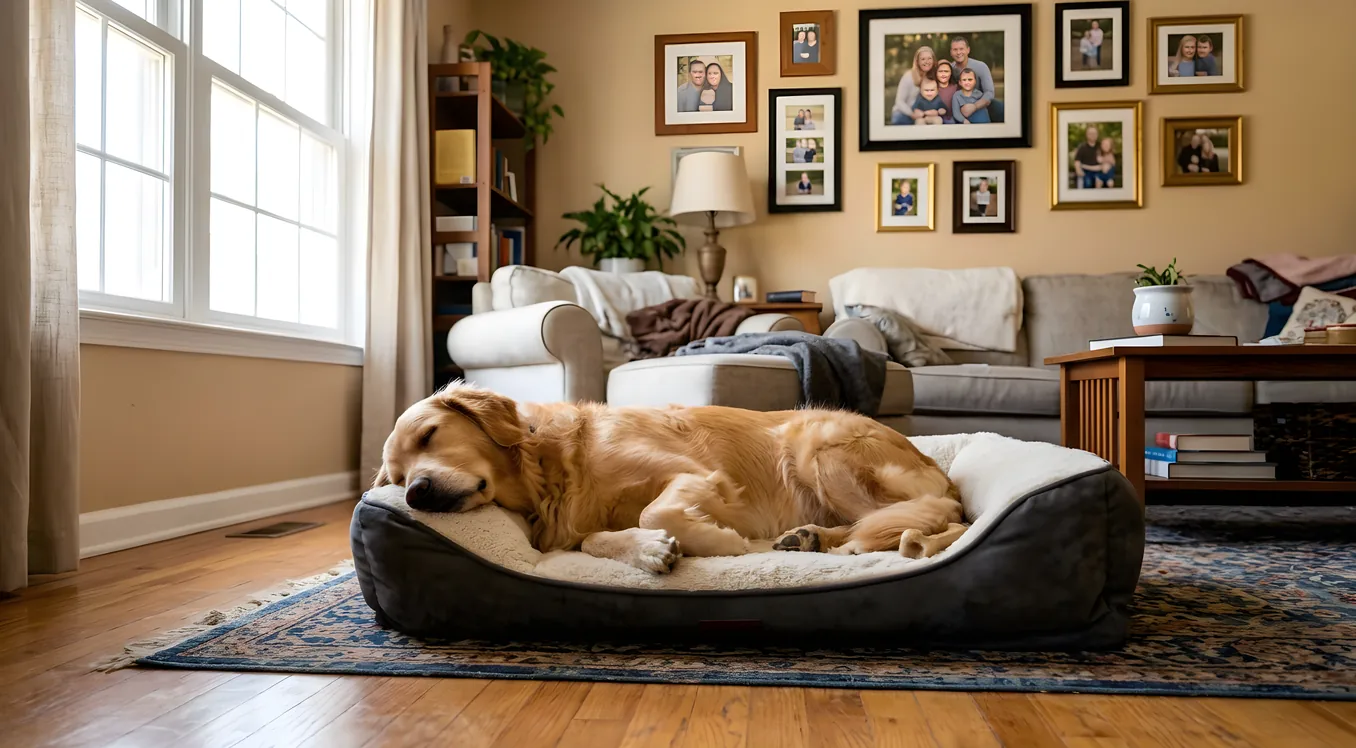
Why Pets Are Less Stressed at Home:
The Case for In-Home Pet Sitting in Frisco
A dog or cat generally stays calmer at home because familiar scents, its own territory, and an unchanged daily routine remove most of the stress triggers that come with an unfamiliar boarding environment. A boarding facility replaces that with a strange building, unfamiliar animals, and an institutional schedule, producing visible stress: excessive panting, pacing, or appetite loss in dogs, and hiding, litter box avoidance, or grooming changes in cats, sometimes even after the pet is back home. In-home pet sitting addresses this directly, since a pet stays in its own bed, eats its usual food on schedule, and sees a consistent caregiver instead of rotating kennel staff. Pets with separation anxiety often do better with in-home pet sitting than boarding, since the same bed, same food, and same schedule stay in place while the owner is away. A legitimate overnight pet sitter extends that principle to longer trips by staying in the client’s own home rather than moving the pet elsewhere. The sections below cover the mechanism behind this, the signs of boarding stress, and what routine-continuity care looks like.
What Makes a Pet’s Own Home Less Stressful Than Boarding
Scent is one of the primary ways dogs and cats orient themselves and self-soothe. A pet’s own home carries the owner’s scent throughout, along with the scent the pet itself has left behind over time, something a boarding facility can’t replicate. Territory works the same way: a pet’s own home is a known, safe space, without the competing animals, unfamiliar people, and shared quarters of a kennel. Routine adds a third layer, since the timing of meals and where a pet naps or settles stay constant at home, while a boarding facility runs on an institutional schedule built around dozens of animals instead of one.
Some pets feel this shift more sharply than others. Senior pets, naturally anxious pets, and pets in multi-pet households tend to be more sensitive to a change in environment, since an established routine matters more the longer it has been in place. For a Frisco pet owner weighing in-home care against boarding, that sensitivity is often the deciding factor.
Recognizing Stress in Boarded Dogs and Cats
A dog stressed by boarding often shows it through excessive panting or drooling unrelated to heat or exercise, along with pacing, a drop in appetite, and more whining or barking than usual. Some dogs become destructive in an unfamiliar space, and diarrhea or other digestive upset is common when a strange environment and a diet change happen together. Cats show stress differently: hiding for long stretches, eating less, and either over-grooming to the point of bald patches or grooming less than usual. Urinating or defecating outside the litter box is one of the clearest signs a cat isn’t adjusting well, and increased vocalization often goes with it.
These signs aren’t limited to the boarding stay itself. A dog or cat can come home still withdrawn or off its normal eating and sleeping pattern for a day or two afterward, worth watching for even once the pet is back in its familiar environment.
How In-Home Pet Sitting Keeps Your Pet’s Routine Intact
With in-home pet sitting, a dog or cat stays in its own home: the same bed, the same food and water bowls, and no sudden diet change that can itself trigger stomach upset on top of everything else. Rather than rotating through whichever staff member is on shift, the pet sees the same caregiver or a small, consistent group of caregivers, keeping the trust-and-familiarity side of the routine intact along with the physical surroundings.
This same principle extends to shorter absences too. A mid-day visit carries the routine-continuity principle over to a dog or cat left alone during a workday, giving it a break in its own space rather than a trip elsewhere. For longer absences, an overnight sitter spends the night under the same roof as the pet instead of moving it elsewhere for boarding-style care. See overnight pet sitting for what a multi-day or overnight visit includes.
Pets With Separation Anxiety Need Consistency, Not Change
Separation anxiety is a distinct behavioral pattern, not just general stress. It’s tied specifically to being away from an owner or a normal environment, rather than a dislike of any particular place. For a pet with diagnosed or suspected separation anxiety, adding a second stressor, an unfamiliar boarding environment, on top of the owner’s absence can compound the anxiety response rather than ease it.
Staying in the home environment removes one of those variables even though the owner is still away. The pet keeps its scent-familiar space, its own bed, and its usual routine, leaving the owner’s absence as the one unfamiliar element instead of two or three stacked together. This is general context, not a substitute for a veterinarian’s assessment; any pet owner whose pet shows signs of diagnosed separation anxiety should talk to their vet directly.
Familiar Environment and Pet Stress: Common Questions (FAQ)
Where do overnight pet sitters sleep during an in-home visit?
A legitimate overnight in-home pet sitter stays in the client’s own home, in the pet’s normal environment, rather than moving the pet to a facility. This is the core mechanism behind why overnight in-home care reduces environmental stress compared to boarding. See overnight pet sitting for the full breakdown.
What are the signs my dog or cat is stressed from boarding?
Panting, pacing, appetite loss, or destructive behavior in dogs, and hiding, appetite changes, or litter box avoidance in cats, are the clearest signals during a boarding stay. Just as often, the signs flip once the pet is home: a dog that hid at the facility may turn unusually clingy, or a cat that seemed fine at pickup may avoid the litter box the next day instead. Signs lasting more than a couple of days are worth mentioning to a veterinarian.
Does in-home pet sitting really help pets with separation anxiety?
It removes one major variable, the unfamiliar environment, even though the owner is still away, which is why many owners of anxious pets choose in-home care over boarding. Consistency of caregiver matters as much as location: a pet that sees the same sitter across visits tends to settle faster than one facing a new face and a new environment at once.
Choosing Lower-Stress Care for Your Frisco Pet
Recognizing stress in a dog or cat is the first step; choosing lower-stress care is the next one. The scent, territory, and routine factors covered here are why many Frisco pet owners with an anxious pet lean toward in-home care instead of a kennel. For the full cost and decision breakdown, see in-home pet sitting vs. boarding, or compare vetted local sitters directly in the directory. Owners weighing a different concern, like a senior pet or multi-pet household, can find more benefits of in-home pet sitting in Frisco.